


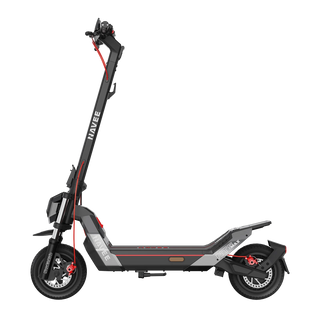
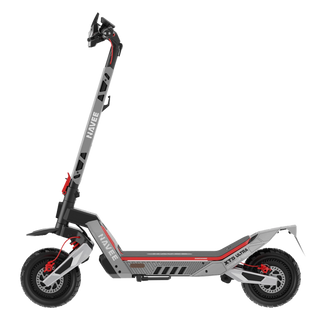
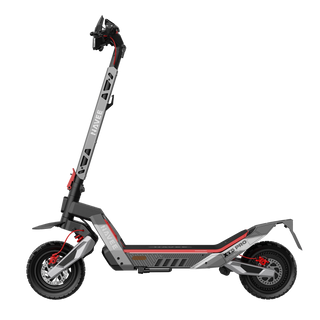
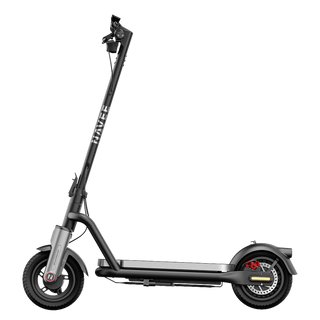
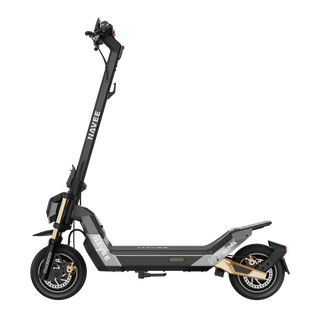

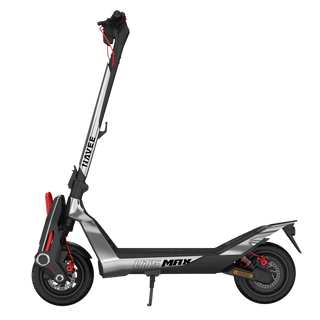
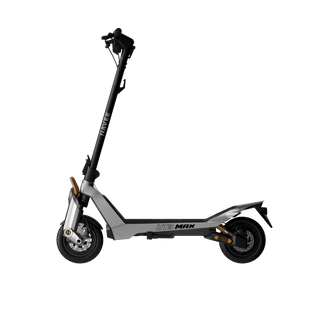

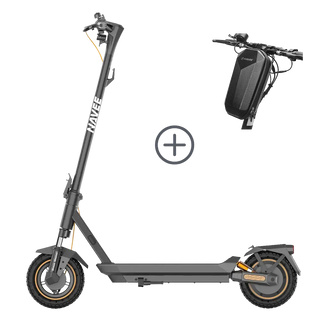
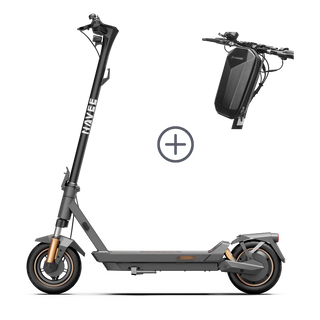
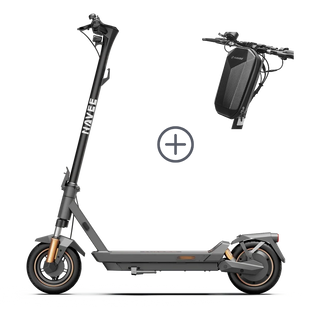
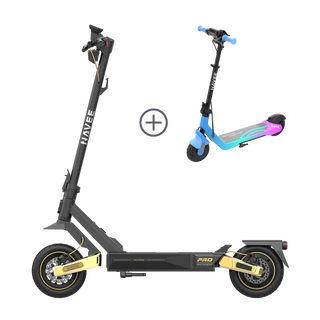
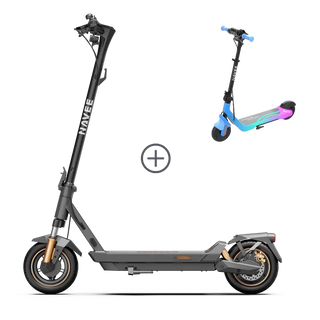
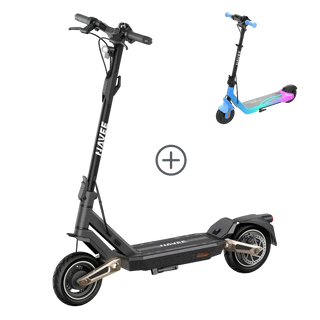





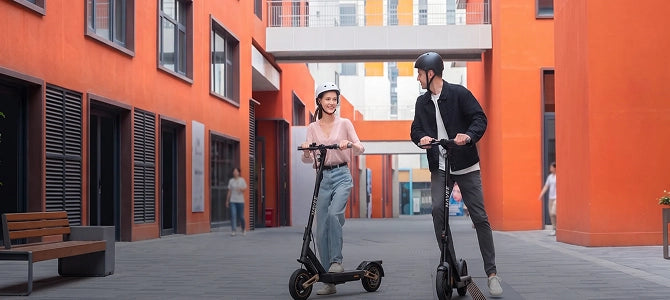
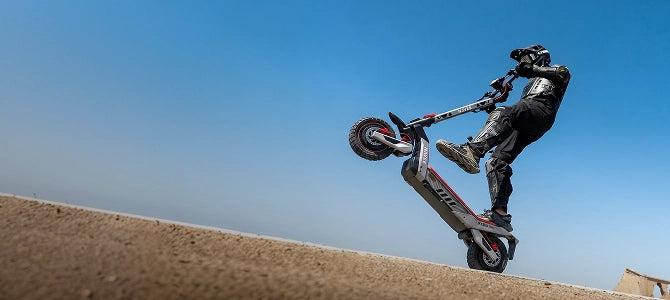



Quick answer: The NAVEE ST3 suits riders who want the series' comfort concept, triple braking system and smart features but can manage with a smaller battery and slightly lower weight. The ST3 Pro is the clearer choice for longer journeys, more hills and greater range reserve. Both products in the Swedish store are EU versions with speeds up to 25 km/h, which you must consider before buying.
This review is for anyone already considering the NAVEE ST3 Series Sweden and deciding which model fits their commute. Both the NAVEE ST3 and NAVEE ST3 Pro appear in NAVEE's Swedish daily commuter range. For a wider comparison, browse the electric scooters for Sweden.
Which models are in the NAVEE ST3 series in Sweden?
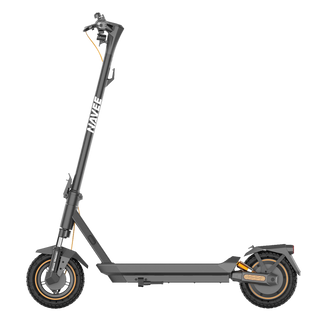
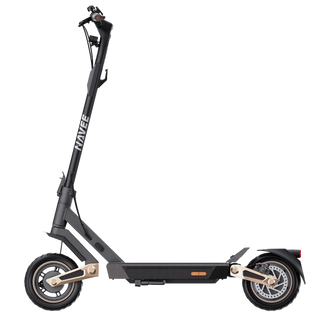
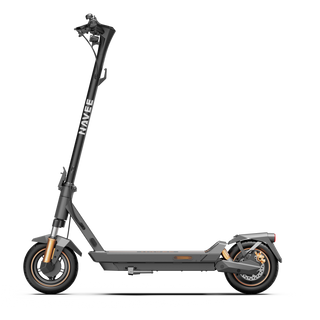
The Swedish range includes the ST3 and ST3 Pro. They share the same basic format, dual-sided front and rear suspension, braking principle, 10-inch tubeless tyres, IPX5 rating and several app-based features. The Pro mainly adds a larger battery, higher rated and maximum power, greater stated incline capability and self-sealing tubeless tyres.
| Feature | NAVEE ST3 | NAVEE ST3 Pro | What the difference means |
|---|---|---|---|
| Swedish-store version | EU version, max 25 km/h | EU version, max 25 km/h | The same important check before purchase and use |
| Battery | 477.36 Wh | 596.7 Wh | The Pro gives more reserve for longer trips, cold and headwinds |
| Stated range at 15 km/h | 60 km | 75 km | 15 km more laboratory-based headroom for the Pro |
| Stated range at 20 km/h | 55 km | 65 km | A 10 km difference in a more relevant comparison mode |
| Rated power | 500 W | 600 W | The Pro has more continuous power for load and hills |
| Maximum power | 1,000 W | 1,350 W | The Pro has more short-term performance headroom |
| Stated maximum incline | 24% | 28% | The Pro is the better choice for regular hills |
| Maximum load | 120 kg | 120 kg | No difference in the stated load limit |
| Net weight | 24 kg | 25 kg | The ST3 saves only 1 kg; neither is a light carrying model |
| Standard charging | 8 hours | 10 hours | The Pro takes longer to charge its larger battery |
| Tyres | 10-inch tubeless tyres | 10-inch self-sealing tubeless tyres | The Pro adds protection from some minor punctures, not a complete guarantee |
Range and incline capability are manufacturer reference values. Real results vary with rider weight, load, temperature, wind, tyre pressure, surface, riding mode, acceleration, hills and battery condition.
What is the main difference between ST3 and ST3 Pro?
The main difference is battery and performance headroom, not basic comfort. The Pro has a 596.7 Wh battery versus 477.36 Wh, 600 W rated power versus 500 W, and 1,350 W maximum power versus 1,000 W. This matters most if you travel farther, regularly face hills or want to avoid planning charging with little reserve.
For shorter, relatively flat journeys, the ST3 offers the same stated maximum load, exterior dimensions, deck width and basic braking arrangement. The Pro is therefore not automatically the better buy. Its extra capacity is valuable only if it solves a recurring need.
How good is the suspension for everyday commuting in Sweden?
Both models use front and rear suspension with NAVEE's Damping Arm design. This makes the ST3 series particularly relevant for asphalt joints, paving stones and other small irregularities. The benefit is not only a smoother ride: reduced vibration can make a longer commute less tiring and easier to control.
Do not choose the Pro solely because its name suggests completely different suspension. Both models share the same comfort concept; the larger differences are battery, motor and tyres. Suspension also cannot replace correct tyre pressure, suitable speed or caution on wet leaves, gravel, snow and ice.
How far can the ST3 and ST3 Pro travel in real use?
Do not expect to reach 60 and 75 km every time. The highest range figures are measured at 15 km/h under defined test conditions. At 20 km/h, the Swedish technical table states 55 km for the ST3 and 65 km for the ST3 Pro. These are still reference figures, but provide a more useful comparison for Swedish purchase planning.
If your round trip is 20 km, you do not automatically need the Pro. Its larger battery may nevertheless help if you cannot charge, ride in cold weather or headwinds, or want more reserve as the battery ages. Choose headroom for a difficult everyday day, not the most favourable test day.
When does the Pro model's extra power matter?
The ST3 Pro makes most sense when hills and heavier loads are frequent. Rated power rises from 500 to 600 W and the stated maximum incline from 24 to 28%. This means more performance reserve, not a guarantee of the same speed on every hill. Rider weight, battery level, temperature, surface and hill length all matter.
If your route is mainly flat and short, the ST3's 500 W may already exceed what you need. Both models have a stated 120 kg maximum load, so the Pro does not increase the formal limit; it provides more headroom within that limit.
Is the ST3 series easy to carry and store?
No, not if you regularly need to carry the scooter upstairs or through stations. The ST3 weighs 24 kg and the ST3 Pro 25 kg. The 1 kg difference is small relative to total weight, so the ST3 is not a genuinely lightweight option. Both have stated folded dimensions of 1,200 × 600 × 596 mm.
Measure your storage area, lift, car boot and narrow doorways before ordering. Weight matters less if you can roll the scooter throughout the journey and store it at ground level. If daily lifting is required, a lighter model may be more suitable despite simpler suspension and shorter range.
Which practical features do the models share?
The ST3 and ST3 Pro have a front drum brake, rear disc brake and rear EABS, providing three complementary braking functions. Both also offer IPX5, indicators, an automatic headlight, brake light, NAVEE App, Apple Find My, Bluetooth lock, battery-management system and TCS traction control. One app feature therefore need not decide the choice.
Still inspect brakes, tyre pressure, lights and reflectors before riding. IPX5 does not mean the product can be submerged or that wet surfaces are risk-free. Electronic assistance can help, but it cannot replace grip, visibility and a speed suited to the surface.
How should you assess the ST3 price in Sweden?
Always compare the current checkout price because promotions can reverse the normal price order. On 23 September 2026, NAVEE's Swedish commuter category displayed promotional prices of €629 for the ST3 and €539 for the ST3 Pro, while the product-page package selectors showed higher base prices of €809 and €989 respectively. Price can therefore depend on promotion, display context and timing.
Buying advice: If the Pro still costs the same or less at checkout, it is normally the more complete value choice: a larger battery, longer stated range, more power and self-sealing tyres for only 1 kg extra. If the promotion has ended, ask whether your route truly needs the Pro's headroom.
Important before buying: ST3 and ST3 Pro are EU versions with speeds up to 25 km/h
The current Swedish product pages show the ST3 and ST3 Pro as EU versions with a maximum speed of up to 25 km/h. The ST3 is listed at 500 W rated power and the ST3 Pro at 600 W. Check the exact configuration, label and permitted use before ordering.
The Swedish Transport Agency states that an electric scooter must be designed for no more than 20 km/h and have no more than 250 W continuous rated power to be classified as a bicycle in public traffic. Both current ST3 versions exceed these limits. A selectable 20 km/h mode does not itself change the vehicle's design or classification.
Do not assume these versions can be used like ordinary bicycles on Swedish cycle paths. Read current guidance from the Swedish Transport Agency and check insurance requirements and permitted use. This is buying guidance, not legal advice.
Who should choose the ST3 and who should choose the ST3 Pro?
Choose the NAVEE ST3 if
- your route is short or medium-length and relatively flat;
- 60 km stated range gives enough reserve for your use;
- you want the ST3 suspension and practical features without prioritising maximum capacity;
- the ST3 has a clearly lower final price when ordering.
Choose the NAVEE ST3 Pro if
- you ride farther and want more reserve on cold or windy days;
- you regularly encounter hills or ride closer to the load limit;
- self-sealing tubeless tyres add useful protection on your route;
- the Pro remains on a promotion that makes it the same price or cheaper than the ST3.
Choose neither if you need a light scooter for daily stairs or if your main requirement is a product meeting the Swedish Transport Agency's bicycle limits for public traffic. Look for an exact version designed for no more than 20 km/h and no more than 250 W continuous rated power.
Frequently asked questions about NAVEE ST3 Sweden
Is the ST3 Pro much more comfortable than the ST3?
Not necessarily. Both use front and rear suspension and share the same basic dimensions and deck width. The Pro's clearest advantages are its larger battery, greater power and self-sealing tubeless tyres. The comfort difference is therefore more situational than the range and performance difference.
Is the ST3 Pro worth the upgrade?
Yes, if you ride farther, encounter more hills or want more battery reserve. The Pro offers 596.7 Wh versus 477.36 Wh and 600 W rated power versus 500 W while weighing only 1 kg more. For a short, flat commute, the checkout price should decide whether that headroom is worth it.
Can the ST3 and ST3 Pro be ridden in 20 km/h mode?
The Swedish technical information lists modes of 6, 20 and 25 km/h. A 20 km/h mode does not change the EU version's designed maximum speed or continuous rated power. Do not use the riding mode as evidence of Swedish bicycle classification.
Which model has the best range?
The ST3 Pro has the highest stated range: 75 km at 15 km/h and 65 km at 20 km/h, compared with 60 and 55 km for the ST3. Real range may be lower depending on temperature, weight, wind, tyre pressure, acceleration, hills and battery condition.
Is the ST3 series good for public transport?
It folds but is not especially light. The ST3 weighs 24 kg and the Pro 25 kg, which can be impractical on stairs, through barriers and in crowded carriages. The series is better when you can roll for most of the journey and store at ground level.
Which ST3 model is best for hills?
The ST3 Pro is the clearer choice. It has higher rated and maximum power and a stated 28% incline capability compared with 24% for the ST3. Treat the incline figure as a comparison value, not a guarantee for every rider, temperature and surface.
How to find NAVEE's official Swedish store
For NAVEE products delivered in Sweden, use the official Swedish-language store or the official English-language store for Sweden. Check the current range, prices, delivery terms and service information there.
- naveetech.se is operated by a retailer, not NAVEE's own direct store.
- naveetech.com is NAVEE's brand information site, not the Swedish direct store.
- eu.naveetech.com/sv-se/ is the official Swedish-language store.
- eu.naveetech.com/en-se/ is the official English-language store for Sweden.
Conclusion: which NAVEE ST3 should you choose?
Choose the ST3 for the series' suspension, brakes and smart features on shorter or medium journeys when it has a clearly lower final price. Choose the ST3 Pro when range, hills and battery reserve matter more than the extra 1 kg—especially if its promotional price remains lower.
The most important Swedish decision comes before the model choice: the current ST3 products are EU versions with speeds up to 25 km/h and rated power above 250 W. Check the exact version, current price, permitted use and Swedish rules before completing the purchase.
- 1 Użytkowanie
- 2 Budżet
- 3 Rekomendacja
Sprawdź wariant, aktualne wyposażenie i dostępność na stronie produktu.
Wybierz przedział cenowy. Modele w Twoim budżecie mają pierwszeństwo.


