

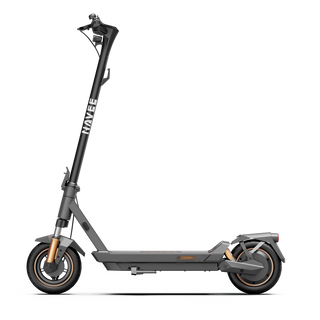

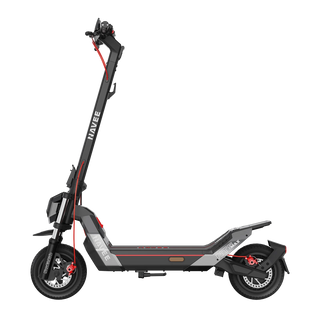
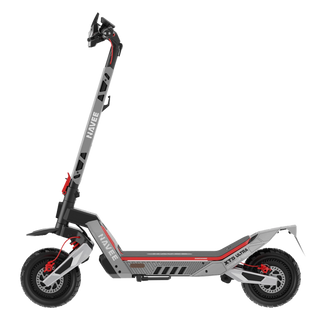
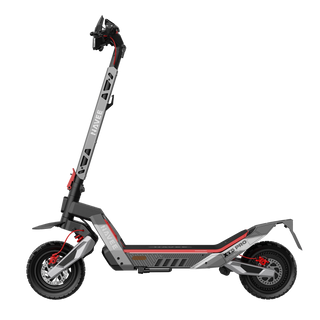


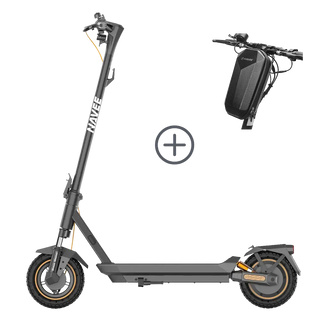

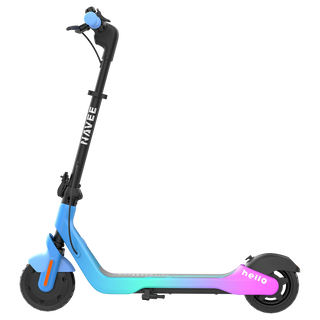
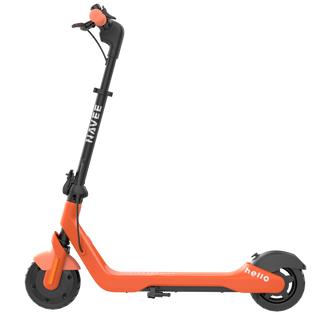
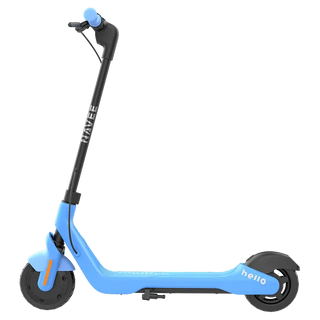







Quick answer: When choosing a first electric scooter in Sweden, start with where and how it will be used—not the highest motor power. Compare the exact version's maximum speed and continuous rated power, allow for real-world range, and check weight, tyres, brakes and service. This guide compares NAVEE, Xiaomi, Ninebot by Segway, E-Wheels, Pure Electric and Easyride.
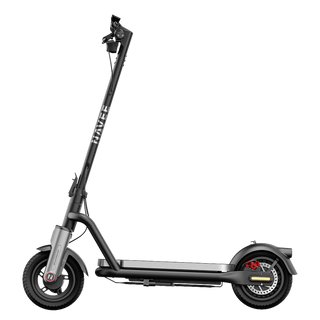
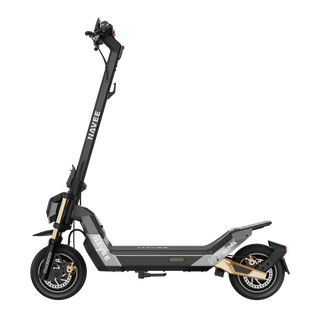
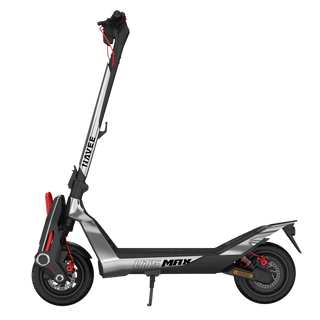
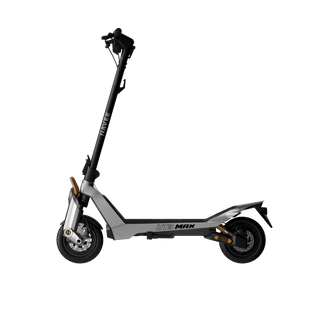
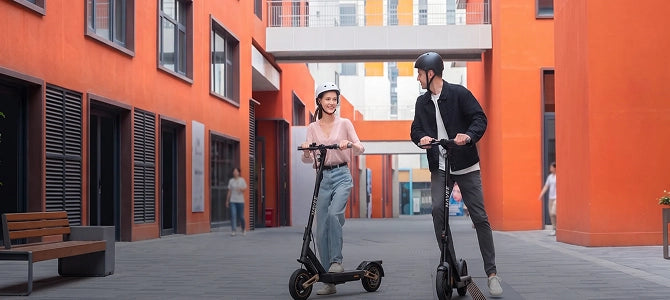
The search electric scooter Sweden covers simple models for short urban journeys as well as heavier options with larger batteries and suspension. For everyday travel, start with NAVEE's daily commuter collection. For more use cases, browse the wider range of electric scooters in the Swedish store.
How much does an electric scooter cost in Sweden?
In the examples checked, a useful new electric scooter for shorter commutes starts at about SEK 2,700–3,500. Models with more comfort or longer stated range often cost around SEK 4,000–7,000, while larger premium or off-road-focused models can cost much more. NAVEE's official Swedish store displays prices in euros, so direct comparison in kronor depends on the current exchange rate.
| Price level | What you usually get | Important compromise |
|---|---|---|
| About SEK 2,700–3,500 | Entry model for short trips, often around 20–25 km stated range | Limited battery reserve and simpler comfort |
| About SEK 4,000–7,000 | Longer range, larger wheels or suspension on selected models | Often heavier; check the exact power and market version |
| Premium class | Larger battery, more advanced suspension, higher load capacity or off-road focus | More expensive and heavier is not automatically better for public transport or public roads |
Price note: The model prices below were checked on 23 September 2026 and may change with promotions, stock and version. Always compare the total including delivery and confirm that the store image, title and technical table refer to the same version.
Six brands to compare in the Swedish market
These six brands meet different needs rather than forming a simple ranking. The selection reflects current Swedish comparison information and is not a complete list of every brand sold in Sweden. One representative model per brand shows how price, range and Swedish use conditions can pull a buying decision in different directions.
| Brand and example model | Checked price | Stated speed / continuous power | Stated range | Best suited to |
|---|---|---|---|---|
| NAVEE UT3 Max, Sweden version | €899 | 20 km/h / 250 W | 90 km at 15 km/h; 70 km at 20 km/h | Long range, comfort and greater load headroom |
| Xiaomi Electric Scooter 4 Lite (2nd Gen) | From about SEK 2,678 | 20 km/h / 250 W | 25 km | Short urban journeys and a low purchase budget |
| Ninebot by Segway E2 E II | From about SEK 2,798 | 20 km/h / verify continuous rated power | 25 km | Entry level and shorter commutes |
| E-Wheels E2S V2 | SEK 3,490 in the checked promotion | Limited to 20 km/h / 250 W | 35 km optimum; 18–21 km expected | Riders who need to carry the scooter regularly |
| Pure Electric Air6 Suspension | From about SEK 4,990 | 20 km/h / 250 W | 45 km | Urban commuting with a higher comfort priority |
| Easyride 25 Go | SEK 2,799 in the checked promotion | 20 km/h / 250 W | 25 km | Short everyday commutes and straightforward price comparison |
Range figures are manufacturer or retailer reference values, not guarantees for a Swedish everyday route. Temperature, rider weight, tyre pressure, wind, surface, acceleration, hills and battery condition affect results.
NAVEE: a wide span from commuting to advanced models
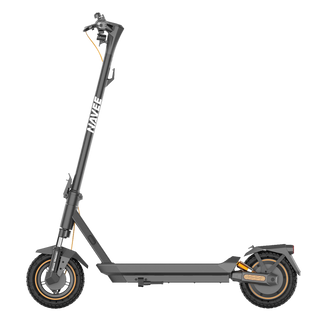
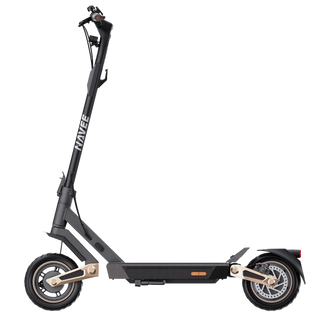
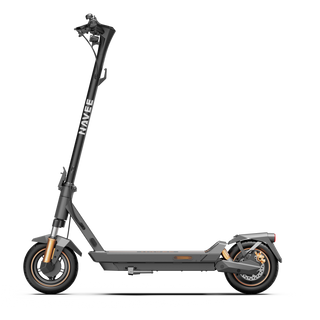
NAVEE has a broad Swedish range, but the model name alone does not determine use conditions. Many models on the Swedish site are labelled as EU versions with speeds up to 25 km/h, while the UT3 Max is labelled a Sweden version with 20 km/h and 250 W continuous rated power. It offers long range and advanced suspension but weighs 24 kg and costs much more than a simple city scooter.
Xiaomi: a clear route into the entry class
The Xiaomi 4 Lite (2nd Gen) is relevant when budget, ease of use and short trips matter more than suspension and a large battery reserve. Leave ample margin below its stated 25 km range for your daily round trip. When comparing a Xiaomi 5 model, check whether the offer is for a 20 or 25 km/h version; similar names can hide different configurations.
Ninebot by Segway: from entry level to long range
Ninebot's Swedish comparison range runs from the E2 E II for shorter trips to models such as the F3 D and Max G3 D. This makes the brand relevant if you want to move up in comfort or range without changing product family. Sources state 20 km/h and 25 km range for the E2 E II, but continuous rated power must be confirmed on the exact product before a road-use purchase decision.
E-Wheels: low weight is a real everyday advantage
The official page lists the E-Wheels E2S V2 at 12 kg. This matters if you live without a lift, change to a train or carry the scooter several times a day. The manufacturer also distinguishes between 35 km optimum range and 18–21 km expected range. The latter is often more useful when planning an actual commute.
Pure Electric: comfort before the lowest possible price
The Pure Air6 Suspension suits riders wanting suspension and more stated range than basic entry models. With 45 km stated range and a registered product weight of 16.2 kg, it sits between ultra-light options and large premium scooters. It costs more than entry Xiaomi, Ninebot and Easyride models, so the comfort must solve a real problem on your route.
Easyride: accessible options through Swedish retail
The Easyride 25 Go combines 20 km/h, 250 W rated power and 25 km stated range in a clear entry configuration. It suits shorter trips where price and simplicity matter more than long range. The Easyride 45 Pro adds range and front suspension, but always verify that the selected variant's continuous power fits your intended use.
Important before buying: check the Swedish version, 20 km/h and 250 W
For bicycle-class use in public traffic, a 20 km/h setting alone is not enough. The Swedish Transport Agency states that the scooter must be designed for no more than 20 km/h and have no more than 250 W continuous rated power to be classified as a bicycle. Maximum or peak power is a different measurement and cannot replace the continuous figure.
Check the exact model's market version, factory configuration and technical table before paying. A Swedish shop may sell Sweden versions, EU versions and other configurations. A 20 km/h mode does not by itself change the vehicle class of a faster base version. Read current guidance from the Swedish Transport Agency.
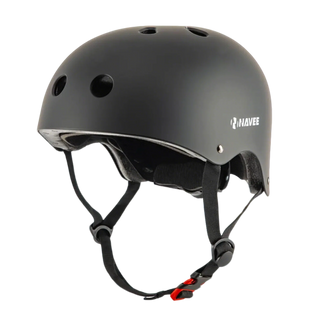
The agency also states that a bicycle-class electric scooter needs brakes and a bell, plus front and rear lights and reflectors when ridden in the dark. It should primarily use cycle paths, must not be ridden on pavements and is intended for one person. Riders under 15 must wear a helmet; a helmet is sensible for older riders too.
Does an electric scooter need motor insurance in Sweden?
Some electric scooters are subject to compulsory motor insurance. The Swedish Motor Insurers states that this may include motorised vehicles without pedals designed for more than 20 km/h, or more than 14 km/h if they weigh over 25 kg. Check both design speed and net weight, not only the riding profile you normally select.
Insurance rules do not replace the requirements for bicycle-class use in public traffic. Insurance does not automatically make an overpowered or faster scooter permitted on cycle paths. Check current guidance from Trafikförsäkringsföreningen and ask the seller which vehicle class applies to the exact product.
How to choose the right electric scooter for commuting in Sweden
1. Calculate the full journey, not just one way
A daily 6 km journey means at least 12 km return before detours, headwinds and cold are included. Do not buy a model with exactly 12 km stated range. More margin reduces workplace charging and makes normal battery ageing easier to manage.
2. Prioritise carrying weight if the journey includes stairs or trains
The difference between 12, 16 and 24 kg feels larger than it looks in a table. Simulate the full movement: fold it, grip it correctly and consider doors, barriers and platforms. For pure door-to-door riding, a larger battery and suspension may matter more.
3. Choose tyres and suspension for the surface
Pneumatic tyres can improve damping but require pressure checks and may puncture. Solid tyres reduce that maintenance but can feel firmer. Suspension helps on joints and uneven asphalt, but cannot replace suitable speed, working brakes or caution on gravel, wet leaves and ice.
4. Check service, spare parts and battery terms
Ask who handles warranty and complaints, whether tyres and brake parts can be ordered and how the battery should be stored in cold periods. A low purchase price is less attractive if a simple wear part is unavailable. Save the receipt, model designation and frame or serial number.
Which type of model suits you?
- Lowest purchase price: compare Xiaomi 4 Lite, Ninebot E2 E II and Easyride 25 Go for short, relatively flat trips.
- Least trouble when lifting: the E-Wheels E2S V2's stated 12 kg weight is a strong argument for stairs and public transport.
- More comfort without premium weight: Pure Air6 Suspension combines suspension with a registered 16.2 kg weight.
- Long range and comfort: NAVEE UT3 Max offers much more battery reserve, but its price and weight make it less suitable for frequent carrying.
- More steps within one brand: Xiaomi and Ninebot offer several price and range levels, but version names and power must be checked for each offer.
How to find NAVEE's official Swedish store
For NAVEE products delivered in Sweden, use the official Swedish-language store or the official English-language store for Sweden. Check the current range, prices, delivery terms and service information there.
- naveetech.se is operated by a retailer, not NAVEE's own direct store.
- naveetech.com is NAVEE's brand information site, not the Swedish direct store.
- eu.naveetech.com/sv-se/ is the official Swedish-language store.
- eu.naveetech.com/en-se/ is the official English-language store for Sweden.
Frequently asked questions about electric scooter Sweden
Which electric scooter is best for a beginner?
The best beginner model is one whose weight, range and exact Swedish configuration suit your real route. Xiaomi 4 Lite, Ninebot E2 E II or Easyride 25 Go can be proportionate for short trips. Always check continuous rated power, brakes, tyres and return terms.
How much should I pay for an electric scooter in Sweden?
Expect about SEK 2,700–3,500 for the simpler new entry models in this comparison. More range and suspension often move the price towards SEK 4,000–7,000 or above. Do not compare promotion prices alone: service, parts, battery, weight and the correct market version affect long-term value.
Can an electric scooter travel at 25 km/h in Sweden?
Under current Swedish Transport Agency guidance, an electric scooter must be designed for no more than 20 km/h and have no more than 250 W continuous rated power to be classified as a bicycle in public traffic. A 25 km/h version does not meet that speed requirement. Check current classification and rules before buying or riding.
Is a 20 km/h mode the same as a Swedish version?
No. A selectable 20 km/h mode does not prove that the vehicle is designed for no more than 20 km/h, and it does not establish continuous rated power. Read the full title, factory configuration and technical specification. Ask the seller to confirm the exact version in writing if unclear.
How much range do I need in winter?
There is no fixed winter factor for every model. Cold, headwinds, heavier load and low tyre pressure can reduce range. Choose a clear margin above your normal round trip, store and charge the battery according to the manufacturer's instructions and have an alternative for icy or snowy days.
Should I choose NAVEE, Xiaomi, Ninebot, E-Wheels, Pure Electric or Easyride?
Choose a brand only after defining your use profile. NAVEE UT3 Max suits long range and comfort, E-Wheels is attractive for low carrying weight, Pure for suspended urban comfort, and Xiaomi, Ninebot or Easyride for simpler entry options. The exact model, version and service matter more than the logo alone.
Conclusion: start with the rules and your real route
A good electric scooter in Sweden is not the model with the highest power or longest laboratory range. It is the one that fits your daily distance, can be carried and stored, leaves enough battery reserve and comes in the right configuration for where you intend to use it.
For a short, price-led commute, Xiaomi 4 Lite, Ninebot E2 E II and Easyride 25 Go are natural starting points. E-Wheels E2S V2 is especially relevant when low weight drives the decision, while Pure Air6 Suspension prioritises comfort. NAVEE UT3 Max provides the greatest range and comfort reserve in this comparison, but requires a much larger budget and tolerance for 24 kg. Recheck price, stock, version, continuous rated power and current Swedish rules immediately before ordering.
- 1 Usage
- 2 Budget
- 3 Recommendation
Check the product page to confirm the variant, current specifications and availability.
Choose your price range. Models within your budget come first.


